The one-paragraph pitch

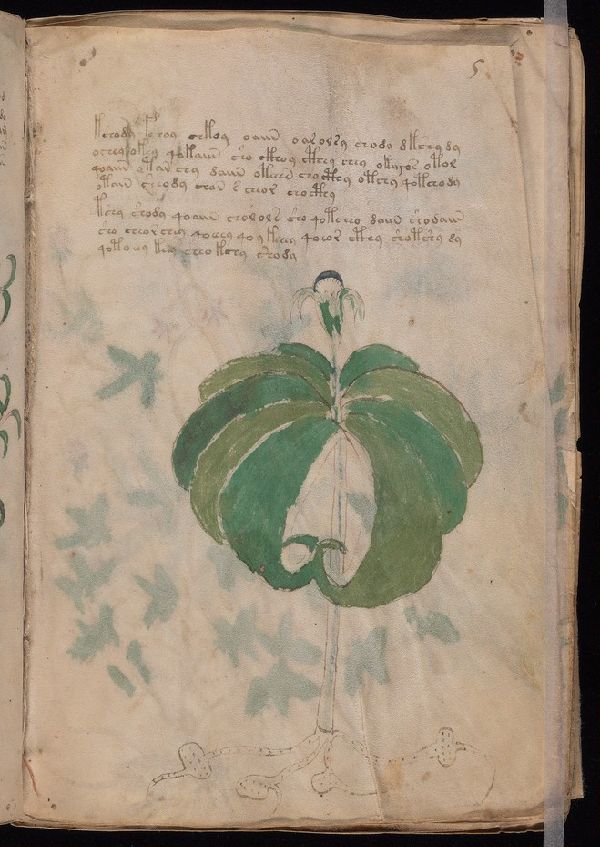
A systematic computational analysis of the Voynich Manuscript across 63 language corpora from 35+ language families has found no natural language that simultaneously matches its full structural profile. The closest match — Tagalog — fails on a key metric and cannot reproduce its result across different texts. The discriminant zone remains empty. The research is published on Zenodo, fully open, and the data is available for independent verification.

Key numbers
63+ Language corpora tested
35+ Language families represented
0 Full structural matches found
600 Years the manuscript has gone unread
Quotable findings

Tagalog comes closest on one metric, then fails on two others — and when we test a different Rizal novel under identical conditions, the match disappears entirely.

Copied.

The manuscript behaves statistically like language. It's not random noise. But it doesn't behave like any language we've tested.

Copied.

Every eliminated hypothesis brings us closer to understanding what structural class the Voynich belongs to — even if we can't read it yet.

Copied.

What's new — vs. existing coverage

The Tagalog cross-text instability finding (2026) is not covered in most previous media. VMML(Noli me Tangere) vs. VMML(El Filibusterismo), tested under identical conditions, shows a delta of 0.336 units — large enough to shift the language between structural zones. This means the apparent Tagalog proximity observed in Paper 7 does not hold as a stable property of Tagalog, and cannot support a strong identification claim.
The character permutation test shows that Voynich and Tagalog achieve similar VMML scores through structurally different mechanisms: Tagalog through infix reduplication (CV patterns), Voynich through a distinct subword architecture. Similar aggregate scores do not imply structural equivalence.
The systematic Austronesian expansion — 6 languages tested (Tagalog, Cebuano, Ilocano, Kapampangan, Waray, Bikol) — is the most thorough computational comparison of Voynich against the Austronesian family to date. None of the six languages simultaneously match the full structural profile.

Downloads

Preprint · Open access Paper 7 — Typological Comparison (35+ families) doi.org/10.5281/zenodo.20386119
Preprint · Open access Paper 8 — Austronesian Expansion & Tagalog Instability doi.org/10.5281/zenodo.20467972
Data & code Full datasets, scripts, and intermediate results voynichlucidity.com/resources
Methodology Operational definitions, parameters, limitations voynichlucidity.com/methodology

Contact

contact@voynichlucidity.com

Responds to technical queries within one week. Background briefings available for credentialed journalists — request via email with outlet and deadline.

All data is available for independent verification. No embargo on any published result.

Get in touch