An Unread Book
The Voynich Manuscript is a handwritten codex of approximately 240 vellum pages, written in an unknown script using an unidentified language — or a system of symbols whose meaning has not been established after more than a century of modern scholarly analysis.
Its vellum has been carbon-dated to the early 15th century (1404–1438, 95% confidence), placing its creation in late medieval Europe. The ink and pigments are consistent with the period. The manuscript appears to be an original composition, not a copy.
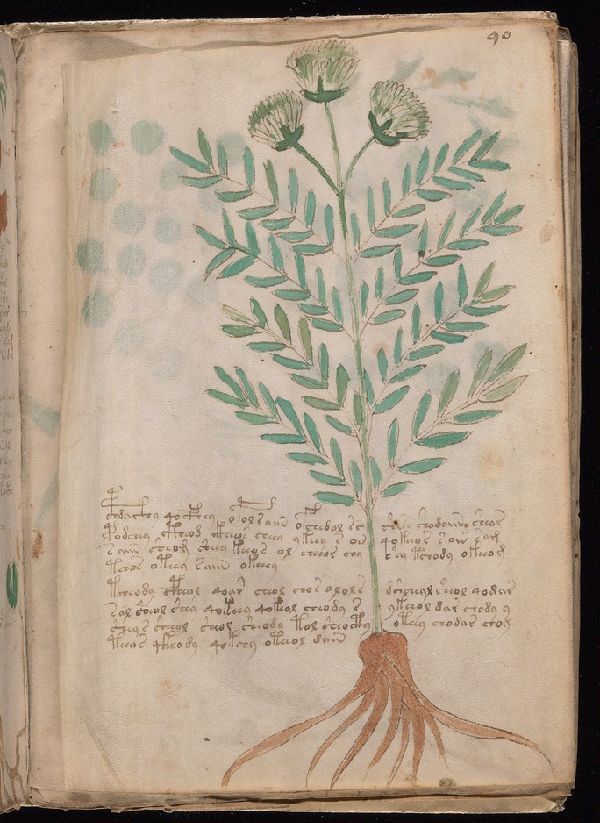
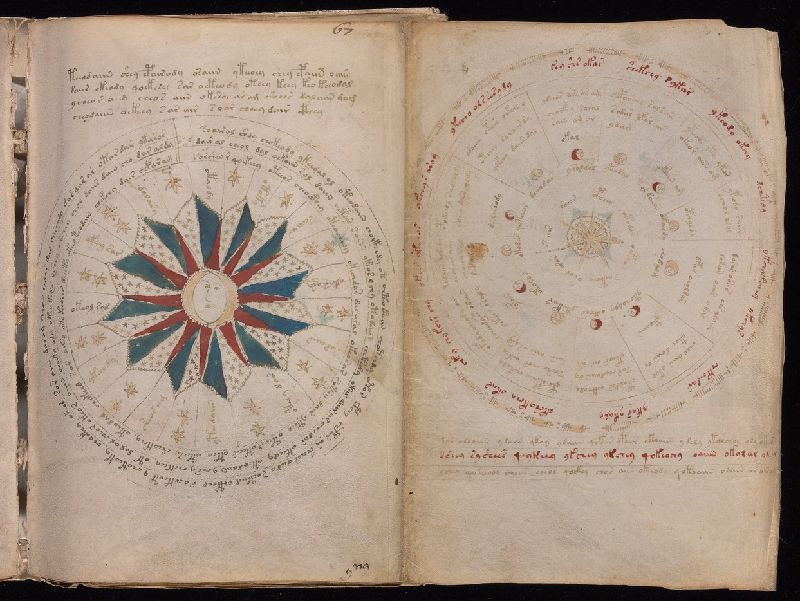
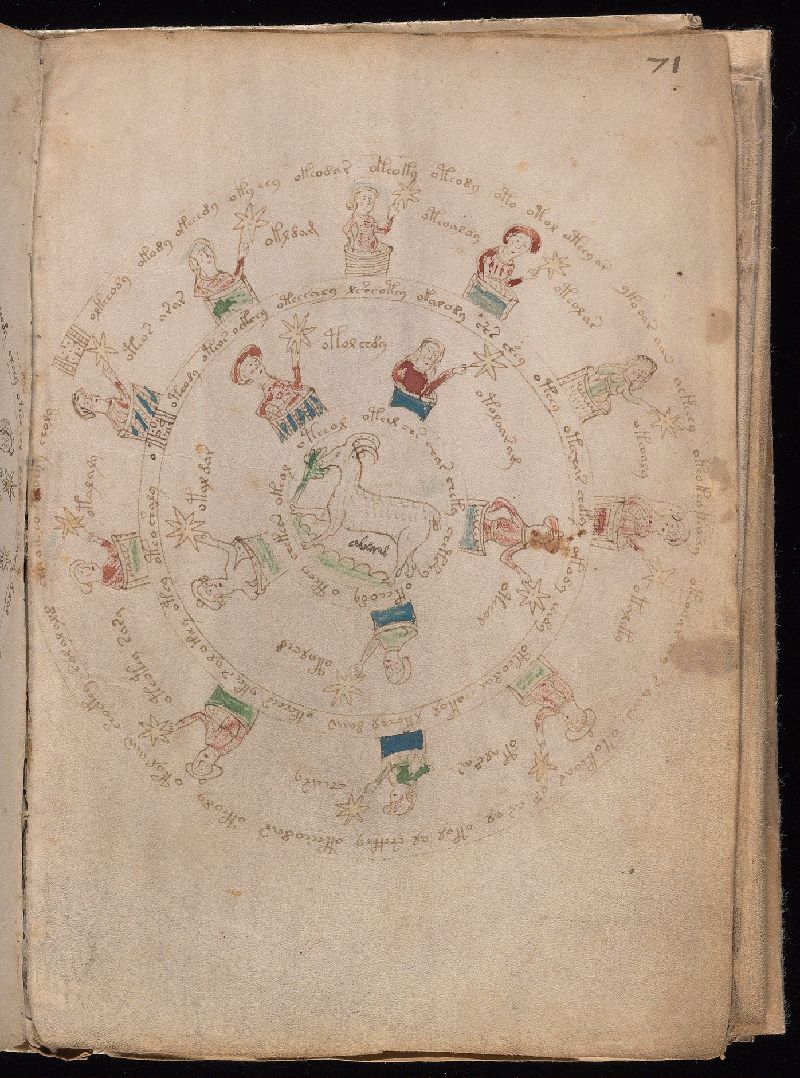
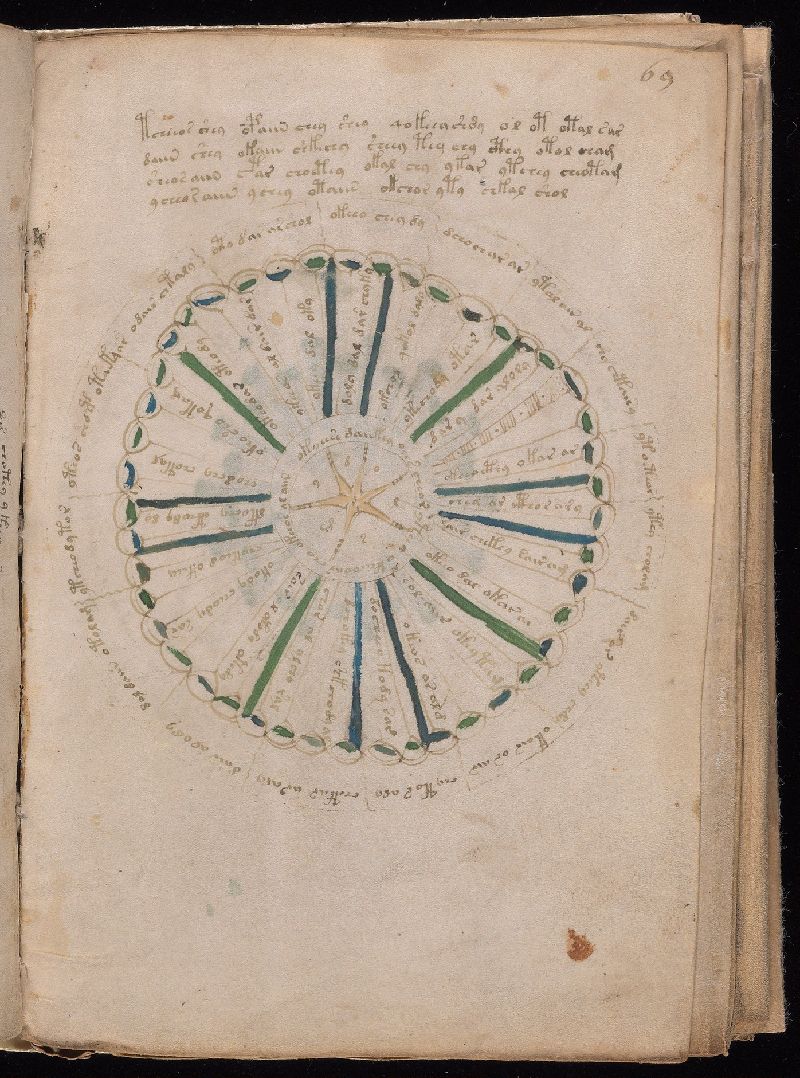
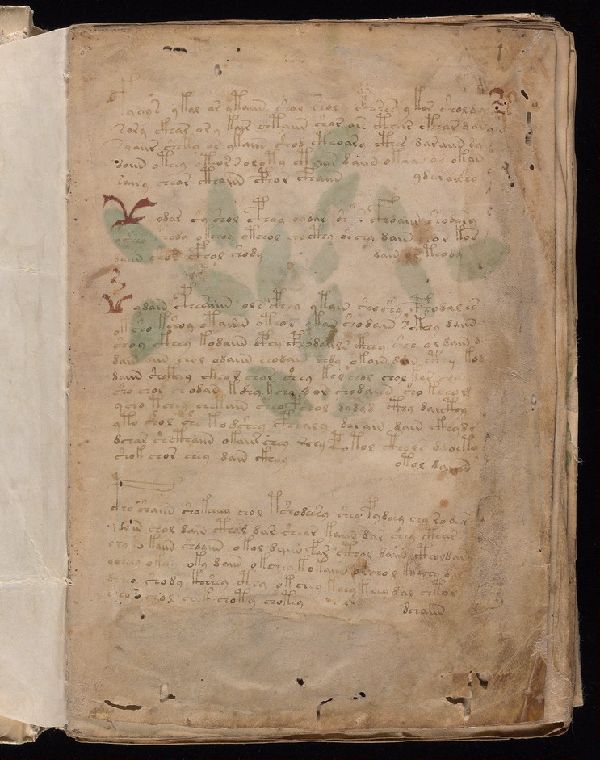
The text is written from left to right, with clear word boundaries and consistent letter-to-letter spacing. It is divided into sections by content — botanical illustrations, astronomical diagrams, biological figures, pharmaceutical recipes, and dense text-only pages — suggesting a structured, purposeful document rather than a random or decorative work.
Despite sustained analysis by cryptographers, linguists, computer scientists, and historians — including teams with access to modern AI and computational tools — no confirmed decipherment has been achieved. The script has no established equivalent in any known writing system.
Physical Description
The manuscript measures approximately 23.5 × 16.2 cm and contains 240 surviving pages (originally more — some folios are missing or cut). It is written on vellum (calfskin) of consistent quality throughout, bound in a contemporary style consistent with early 15th-century European bookmaking.
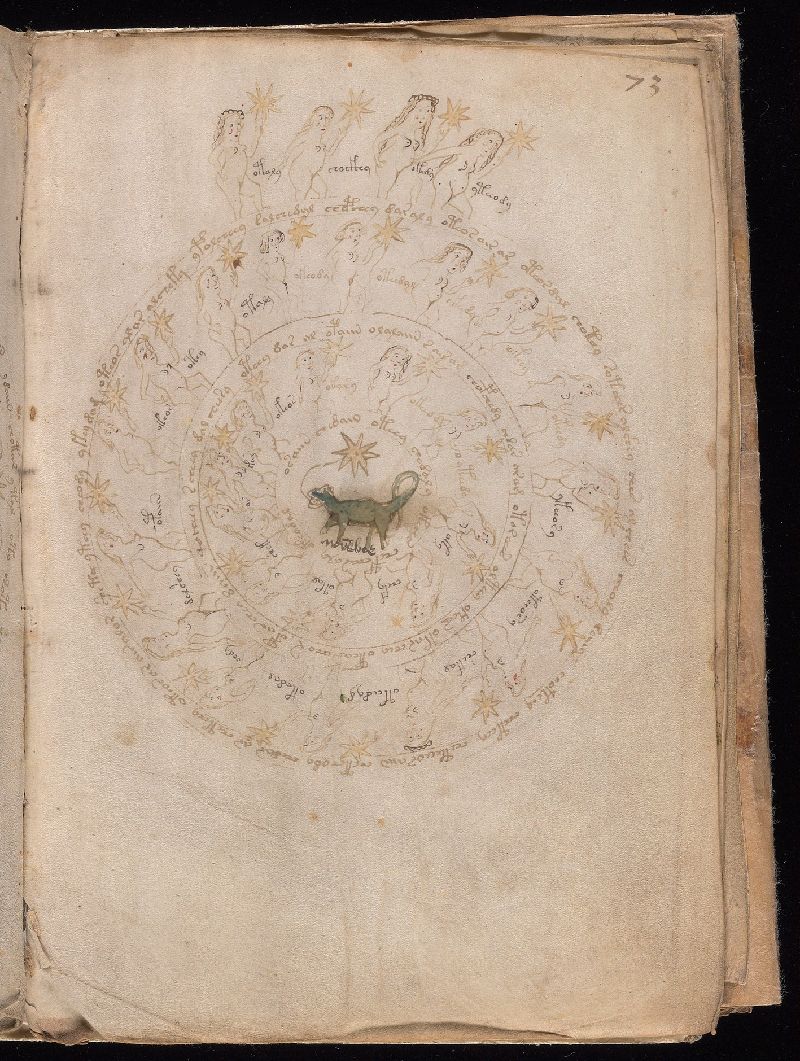
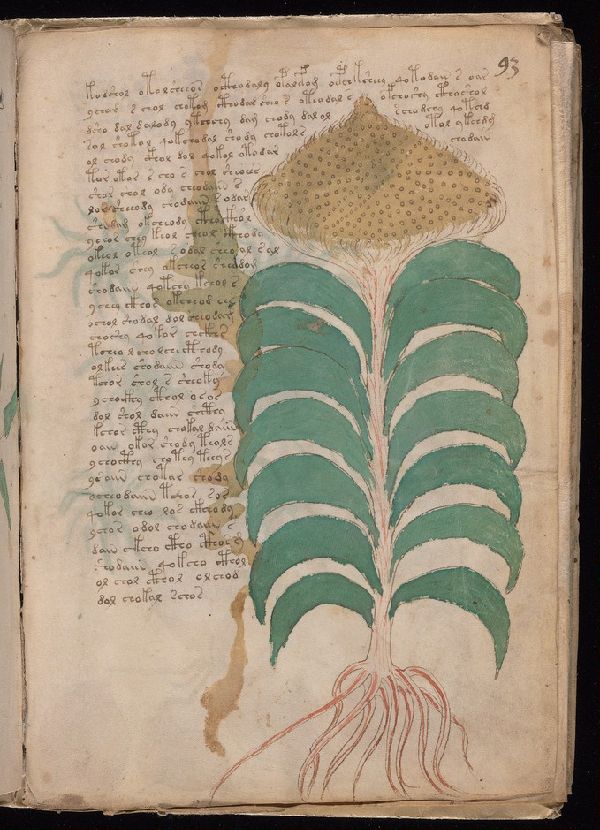
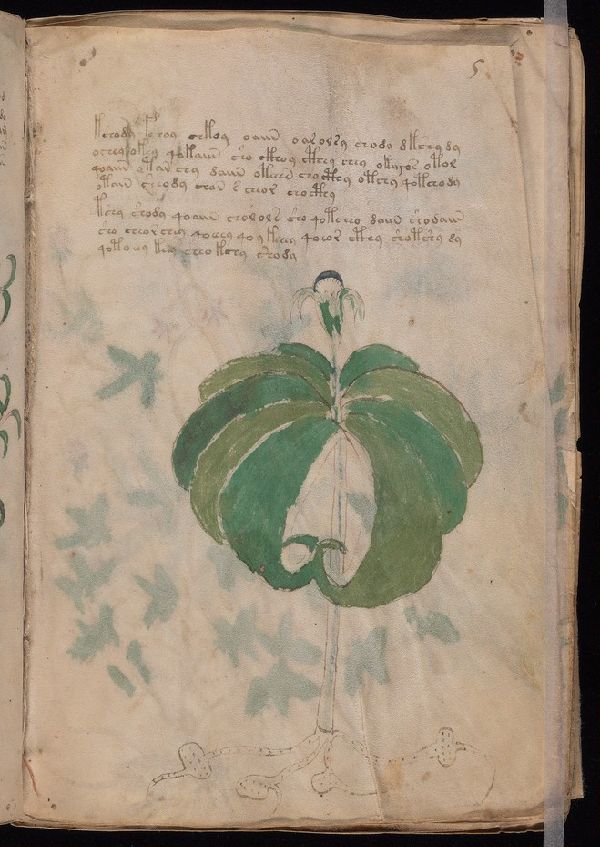
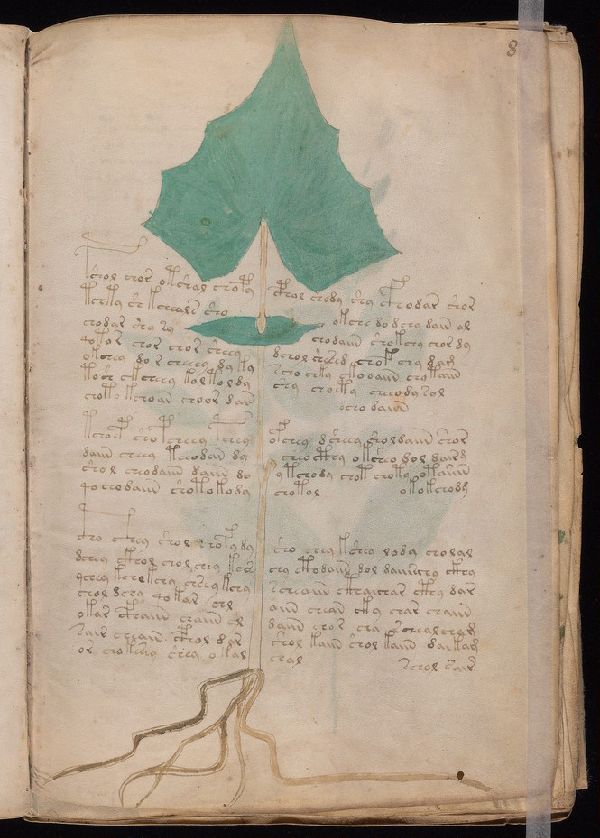
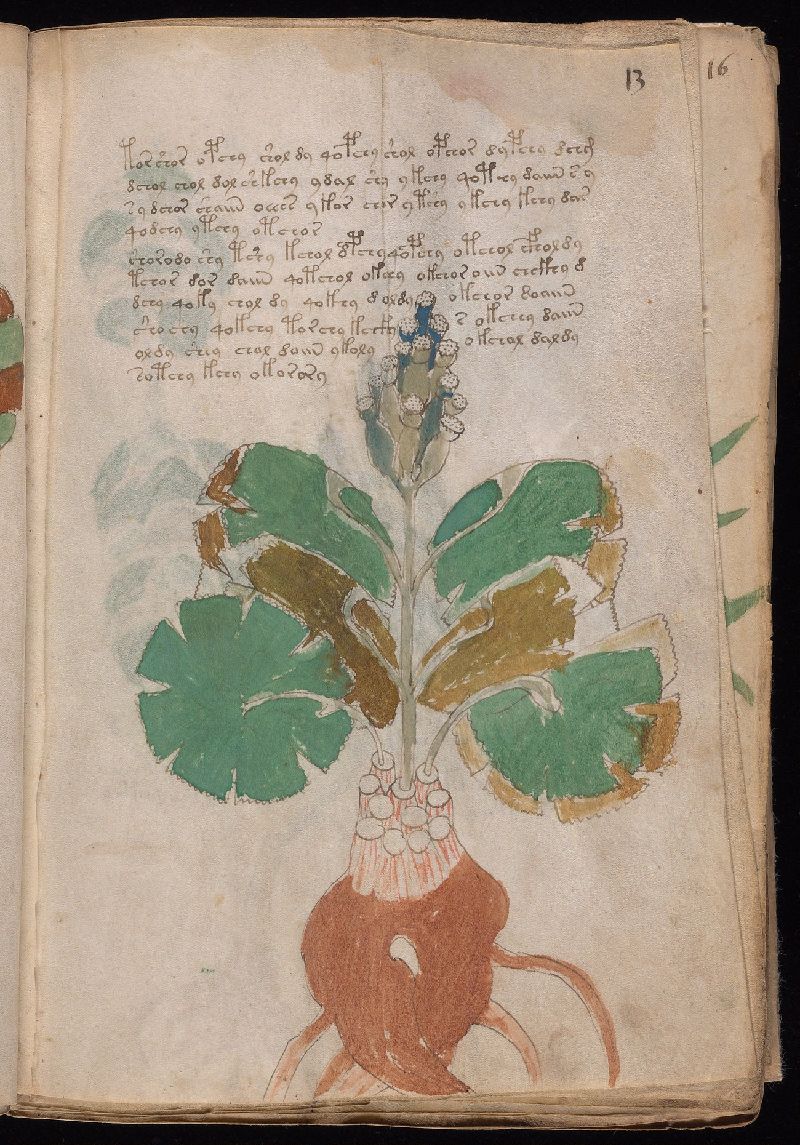
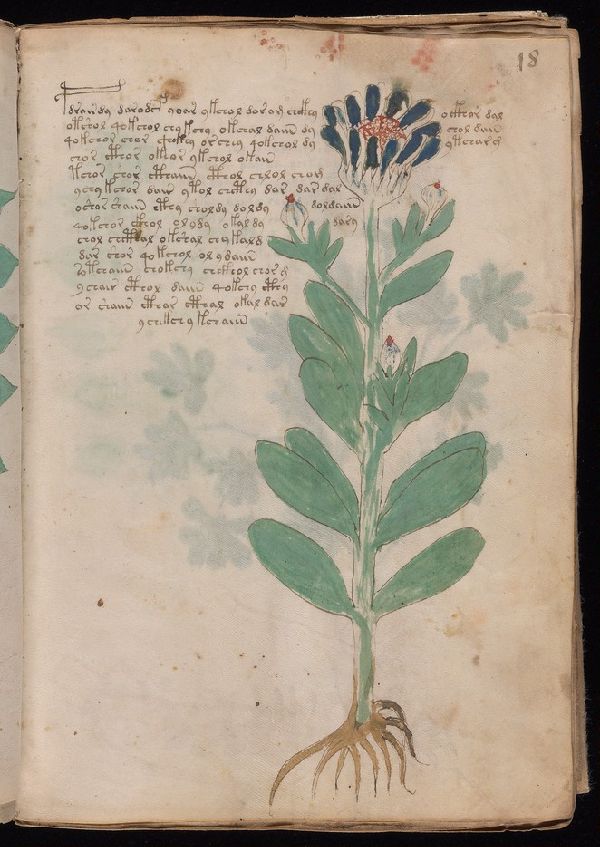
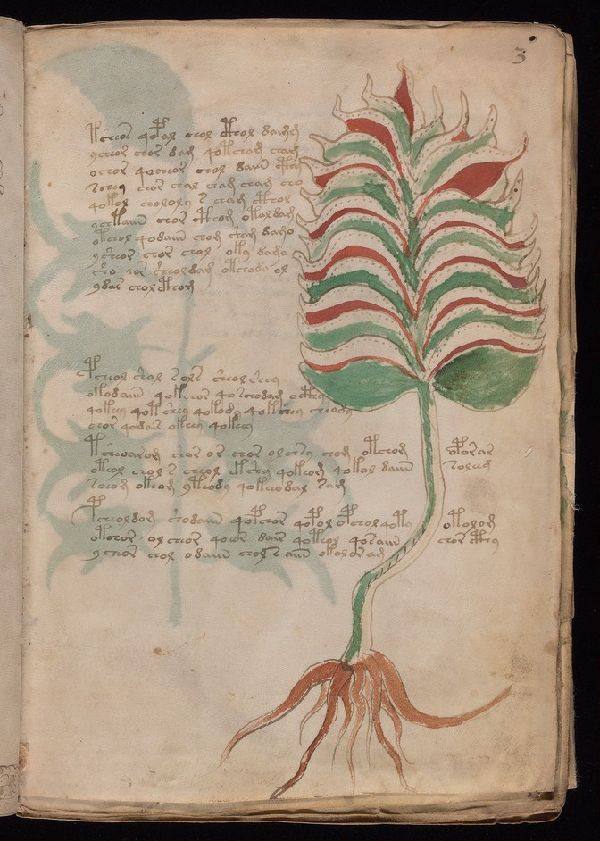
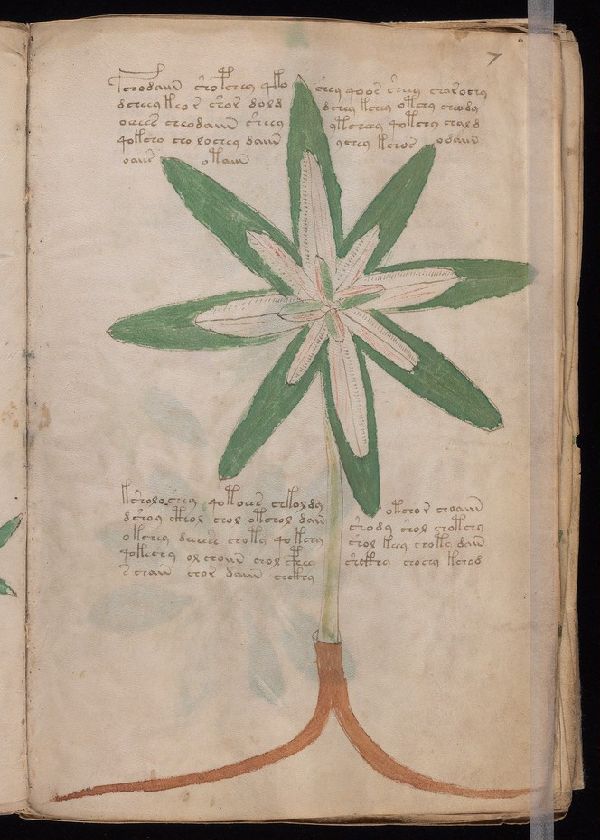
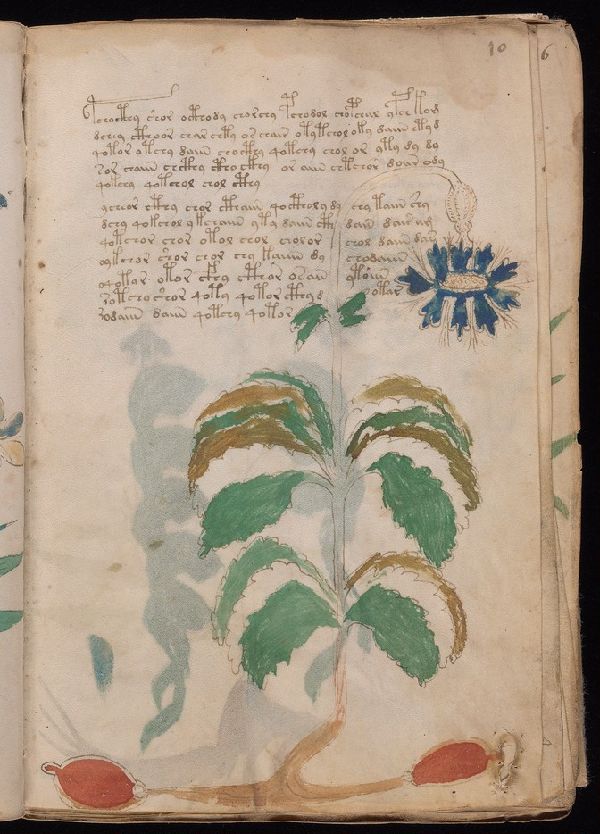
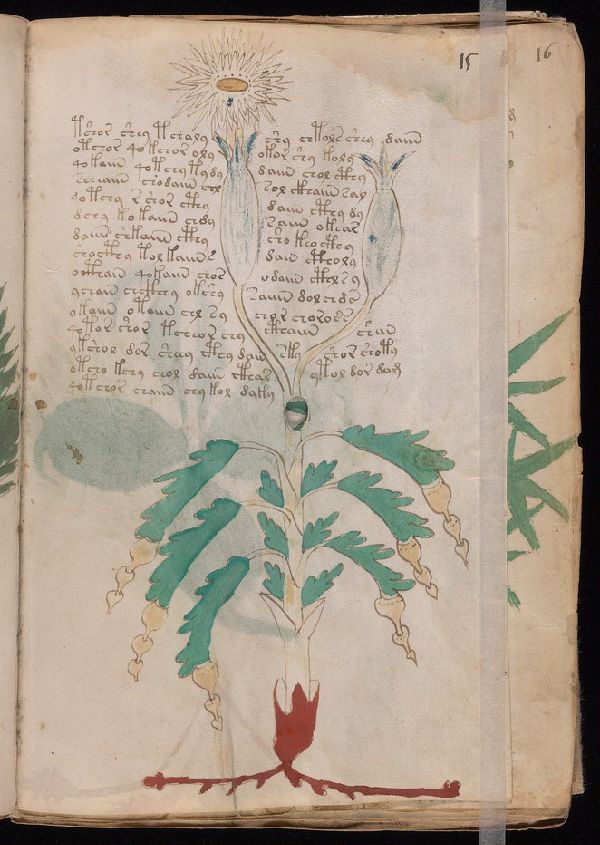
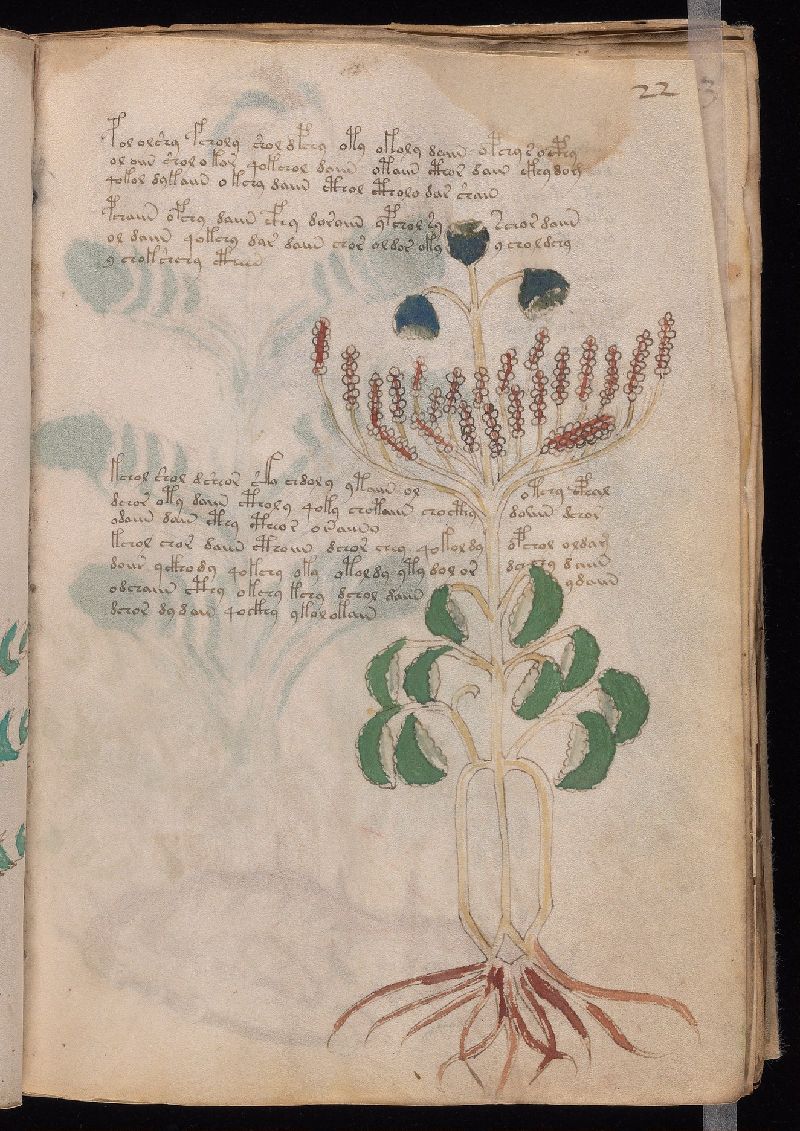
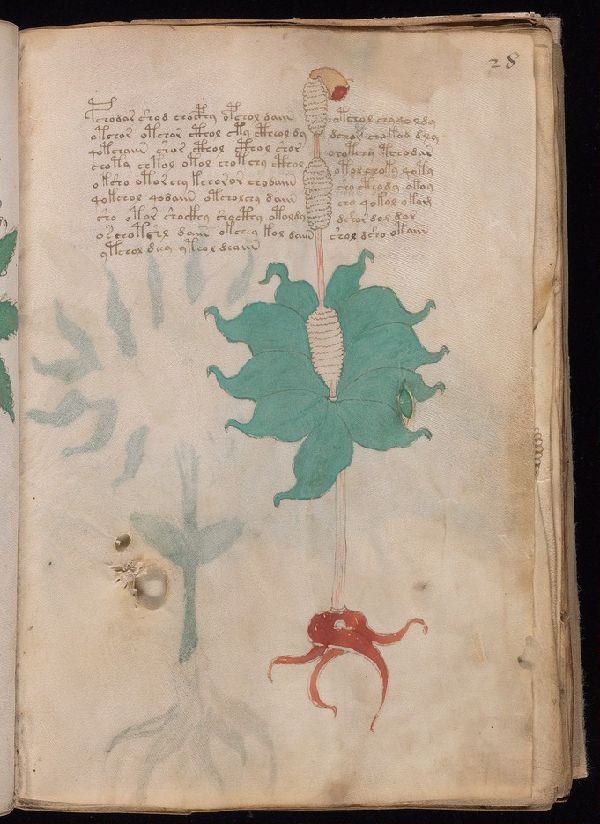
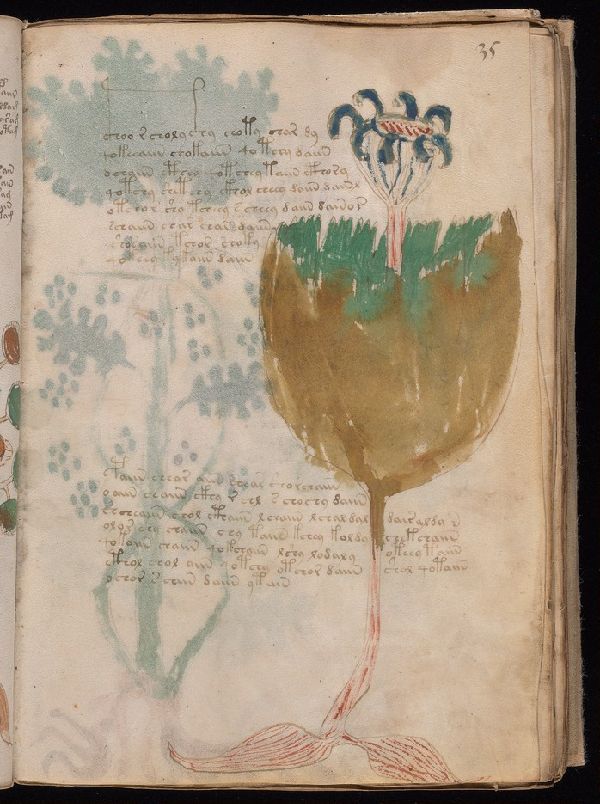
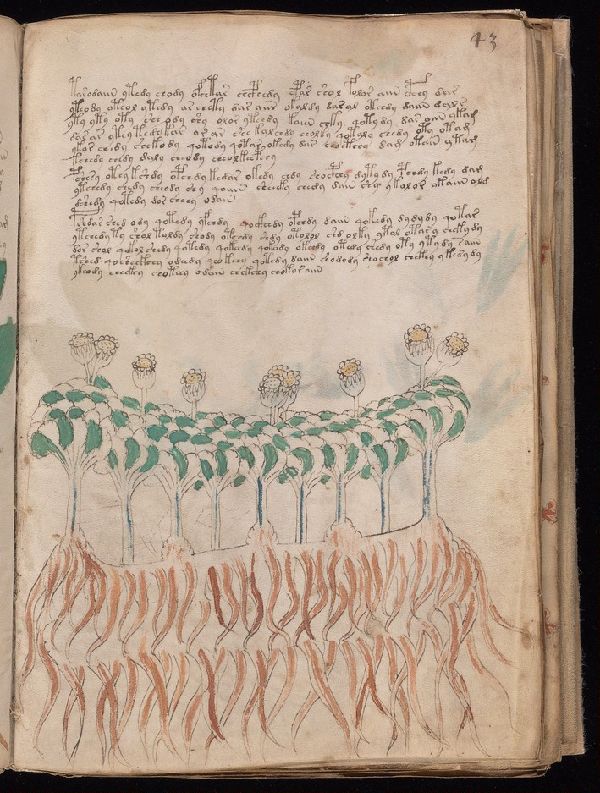
The illustrations are painted in a limited palette — primarily green, brown, blue, and red — using pigments available in medieval Europe. They depict: botanical subjects (unidentified plants, some resembling real species but none confirmed); astronomical diagrams (circular charts with stars and symbols); biological figures (nude female figures in pools connected by tubes); cosmological diagrams; and pharmaceutical imagery (vessels and containers).
The text accompanying these images has been analysed using every available computational method. It exhibits Zipf's law, entropy levels consistent with natural language, and a consistent grammar-like structure — but no cipher key, no bilingual key, and no confirmed translation has ever been produced.
How It Was Found
The modern history of the manuscript begins in 1912, when Polish-American antiquarian book dealer Wilfrid Voynich purchased it from the Jesuit College at the Villa Mondragone in Frascati, Italy. The college was discreetly selling assets to fund its activities, and Voynich recognized the manuscript as unusual among a collection of discarded books.
Voynich identified a letter inside the manuscript from Johannes Marcus Marci to Athanasius Kircher, dated 1666, which stated that the manuscript had been purchased by Holy Roman Emperor Rudolf II for 600 gold ducats — a princely sum suggesting it was believed to be significant. This letter, still preserved with the manuscript, provides the earliest documented provenance.
Voynich spent the rest of his life attempting — and failing — to decipher it. He shared photographs with scholars worldwide, none of whom succeeded. After his death in 1930, the manuscript passed to his wife Ethel Voynich (author of The Gadfly), and subsequently to bookseller H.P. Kraus, who donated it to Yale University in 1969.