The Manuscript Library What It Isn't Our Research Curiosities Media Collaborate Resources
Section 1 of 5

The basics in 30 seconds

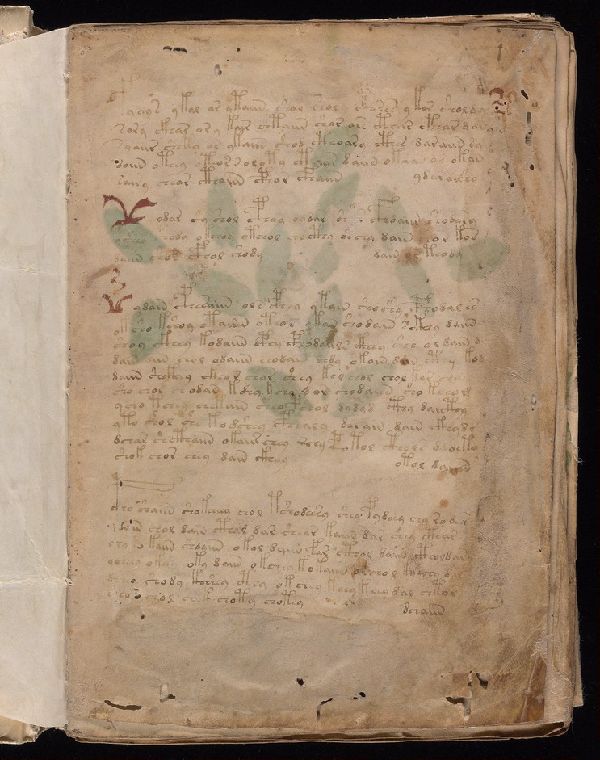
Somewhere around the year 1404, someone sat down and wrote a book. They used an alphabet that nobody had seen before. They wrote in a language that nobody has identified. The book has 240 pages filled with illustrations of plants that don't exist in nature, astronomical diagrams that don't match any known constellation, and groups of women bathing in pools connected by strange tubes.

This book is real. It's not an internet rumor, not a modern fake. Scientists carbon-dated the parchment in 2009, and the results were clear: the material itself is from between 1404 and 1438. It has been sitting at Yale University's Beinecke Rare Book Library since 1969, catalogued as MS 408.

It is called the Voynich Manuscript — named after the rare book dealer who bought it in 1912.

Here's the thing. In 600 years, nobody has read a single word of it. Not one sentence. Not one label under one plant illustration. The text has defeated every expert, every machine, every method thrown at it. And the mystery is genuine — which is exactly what makes it so hard to leave alone.
Section 2 of 5

Why hasn't anyone cracked it?

1

We don't know the alphabet.

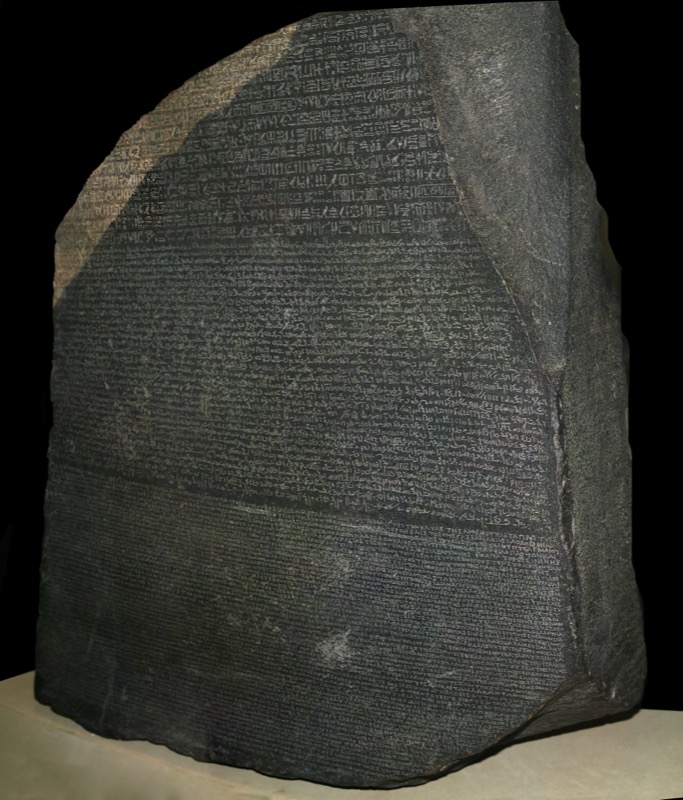
The Voynich uses characters that appear in no other known writing system. When archaeologists cracked Egyptian hieroglyphics, they had the Rosetta Stone — the same message written in three languages, one of which they already understood. For the Voynich, there is no Rosetta Stone. There is no bilingual text, no known key, no anchor point to start from. We don't even know if the characters represent letters, syllables, sounds, or something else entirely.

2

We don't know the language.

Even if we cracked the alphabet tomorrow, we might still be stuck. The text could be a cipher of a known language — Latin, Arabic, Hebrew — written in disguise. It could be an invented language that existed only in the author's mind. It could be a natural language that nobody has matched to it yet. Or it could be something that doesn't fit any of those categories. Researchers have tested 63 languages against the Voynich's structure. None is a convincing match across the board.

3

It might not be a language at all.

Some serious researchers have argued that the whole thing is an elaborate fake — a medieval con designed to look like a mysterious secret text while meaning absolutely nothing. If true, deciphering it would be impossible because there's nothing to decipher. The counterargument is statistical: the text has patterns — word frequency distributions, positional rules, structural regularities — that are extremely hard to fake convincingly and that genuine languages share. The debate is not settled.

4

The best minds have tried. And failed.

This is not a problem that just needs more effort. The NSA — America's signals intelligence agency — studied it during and after World War II. Professional cryptographers who broke Nazi codes tried. Medieval Latin scholars tried. Linguists, computer scientists, AI systems with access to every known human language tried. None got further than partial, contested interpretations that didn't survive peer review. The failure isn't discouraging — it's the clearest measure of how genuinely hard the problem is.

Section 3 of 5

What we actually know for certain

Most things about the Voynich are disputed. These three are not.

It is genuinely medieval.

In 2009, the University of Arizona performed radiocarbon dating on four samples of the parchment (made from animal skin, as was common before paper became widespread). The result: 1404 to 1438. The manuscript is not a modern forgery. It's real, it's old, and it was made during the same period as Joan of Arc's trial and the Ottoman Empire's rise.

Confirmed · 2009 carbon dating

The text behaves like language.

Random gibberish doesn't follow the same statistical patterns as real text. The Voynich does. Its words follow something close to Zipf's Law — the same frequency distribution found in English, Arabic, Chinese, and virtually every natural language. Certain characters appear only in certain positions. Some words cluster near specific illustrations. The structure suggests meaning, even if we can't access it.

Confirmed · Multiple studies

Multiple people wrote it.

Analysis of the handwriting identifies at least five distinct scribal hands — different writers, each responsible for different sections of the book. This means the Voynich was a collaborative project, not the obsessive private work of a single eccentric. Someone organized it. Someone commissioned it or coordinated it. That changes what it might be.

Confirmed · Handwriting analysis
Section 4 of 5

The biggest theories

Five leading explanations — with an honest verdict on each.

Natural language

The text is written in a real, spoken language — one we know or once knew — using the unique Voynich alphabet to represent its sounds. Candidates have included Arabic, Hebrew, Latin, Ukrainian, and dozens of others.

Possible — but none confirmed after 63 tested

Invented language

The author constructed a language from scratch — its own grammar, its own vocabulary, its own internal logic. Medieval Europe had a small tradition of constructed languages, and the Voynich's consistency fits this theory well.

Consistent with the data — untestable

Complex cipher

A known language is hidden inside, disguised by a cipher system — substitution, transposition, abbreviation, or a combination of all three. Medieval Europe had a long tradition of secret writing, especially in alchemical and medical texts.

Possible — no key found

Elaborate medieval hoax

The whole manuscript is meaningless — designed to look profound in order to sell or impress. Medieval forgeries existed. If true, the text carries no information at all, which would explain why no one can decode it.

Statistical patterns argue against pure randomness

Something else entirely

A shorthand system, a glossolalia record, a memory device, a notation system for something that doesn't map cleanly onto language. Some researchers argue we're applying the wrong framework to begin with.

Open
Section 5 of 5

Where to go next on this site

Pick what sounds most like you.

If you're curious about the images

The Manuscript

Browse the sections of the manuscript — botanical, astronomical, balneological. See what the illustrations actually look like and what researchers make of them.

Explore the pages →

If you want to see what's been ruled out

What It Isn't

A clear record of the theories that didn't survive scrutiny. Understanding what's been eliminated is how you understand where the real mystery still lives.

See the eliminations →

If you're looking for the research

Findings

Original typological analysis comparing the Voynich against 63 language corpora across 35 language families. What the numbers actually show.

Read the findings →

If you want to read everything published

Library

The most complete bibliography of Voynich scholarship — academic papers, books, notable forum posts, organized and searchable.

Browse the library →

If you have something to contribute

Collaborate

If you have a background in linguistics, cryptography, medieval history, or computational analysis, this is where to start. Full data access available.

Get in touch →

If you just want weird facts

Curiosities

The strange details that don't fit anywhere else — the missing pages, the repeated symbols, the one word that might be a city name.

See the curiosities →
"The manuscript has survived floods, wars, the Inquisition, and five centuries of human forgetting. Whatever it says, it was meant to last."

Voynich Lucidity  ·  Clarity over certainty. Method over speculation.

↑ Back to top